What Does an Asphalt Distributor Truck Do? Applications and ISUZU Models
Road construction and maintenance require asphalt materials to be applied across a prepared surface in a controlled, consistent way. An asphalt distributor truck combines a heated tank, pump, spray bar and operating controls to support this work on site.
The right configuration depends on the job. Tank capacity matters, but so do spray width, nozzle control, spraying volume and the type of material being applied. This guide explains common roadwork applications and introduces three ISUZU configurations: QKR 4×2 4m³, FRR 4×2 6m³ and FVR 4×2 10m³.
Common Roadwork Applications
Asphalt distributor trucks are used in road construction and maintenance to apply bituminous materials. Common applications include prime coat and tack coat work, while some configurations are also specified for waterproofing-related applications.
A tack coat is applied between pavement layers to help them bond. A prime coat is applied to a suitable base before the next pavement layer is placed. These are different operations, so the material and application method should match the project requirements.
The truck’s spraying system helps crews control how material is delivered across the work area. The selected material, application rate, working speed and surface conditions also matter to the overall paving process.
How the Spraying System Works
Heated tank
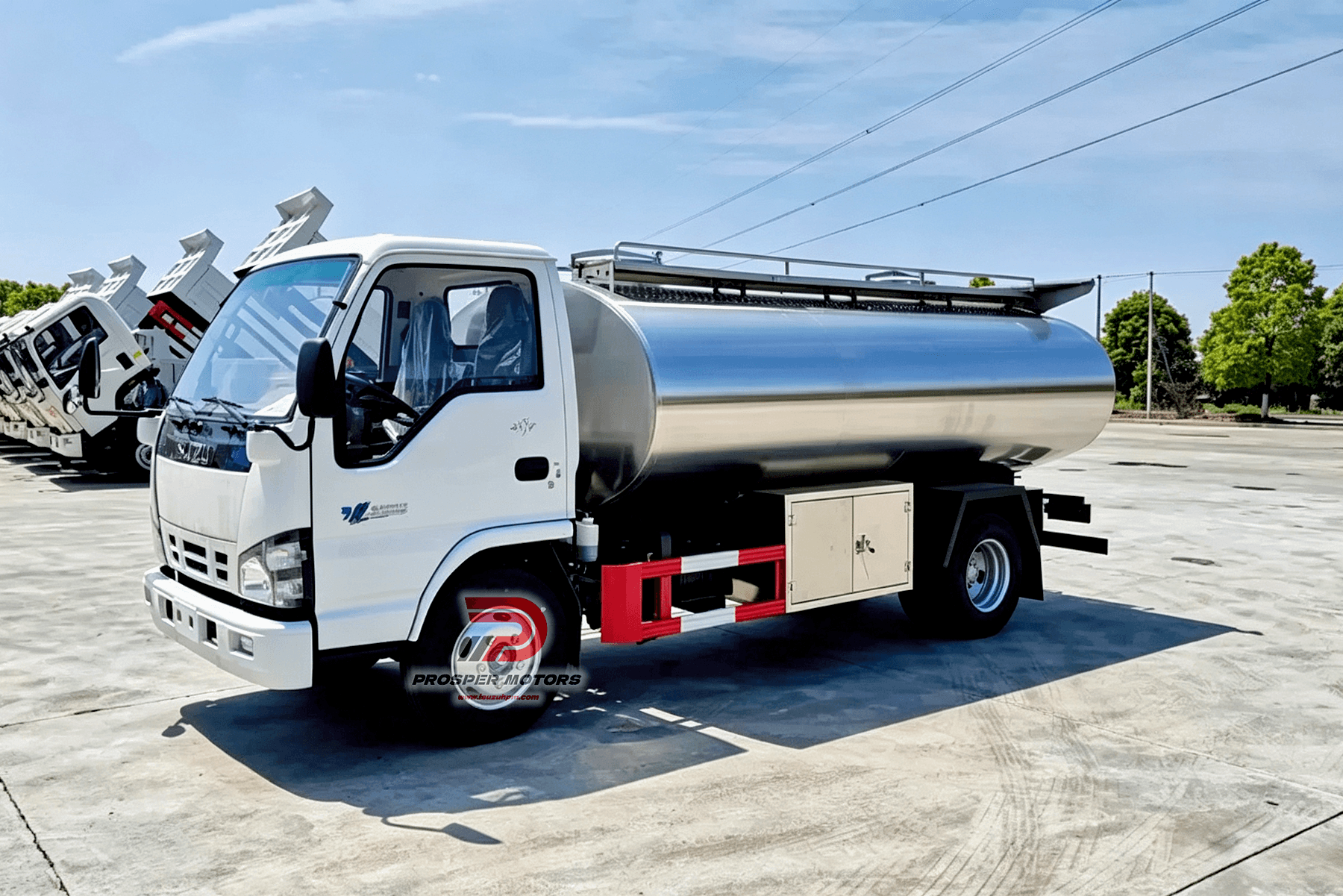
The tank stores the asphalt material, while heating helps maintain conditions for spraying. The QKR description specifies an insulated tank. The FRR and FVR use thermal-oil heating systems.
Pump and spray nozzles
The pump moves material from the tank to the spray system. Nozzles distribute it across the road surface. Nozzle count, spray width and spraying volume vary by configuration, affecting how the truck can be set up for a particular job.
Operating controls
The FRR and FVR support operation from the cab and rear platform. Both also include a handheld spray gun with a 5m hose and wand, providing an additional way to apply material in areas the main spray bar may not reach.
ISUZU Asphalt Distributor Truck Configurations
ISUZU QKR 4×2 4m³ Asphalt Distributor Truck
The QKR is the smallest-tank configuration in this guide, with a 4m³ tank, 26 spray nozzles and a maximum spray width of 4.5m. Its stated applications include prime coats, tack coats and waterproof seal coats. The compact light-duty configuration is suited to road maintenance on narrower routes.
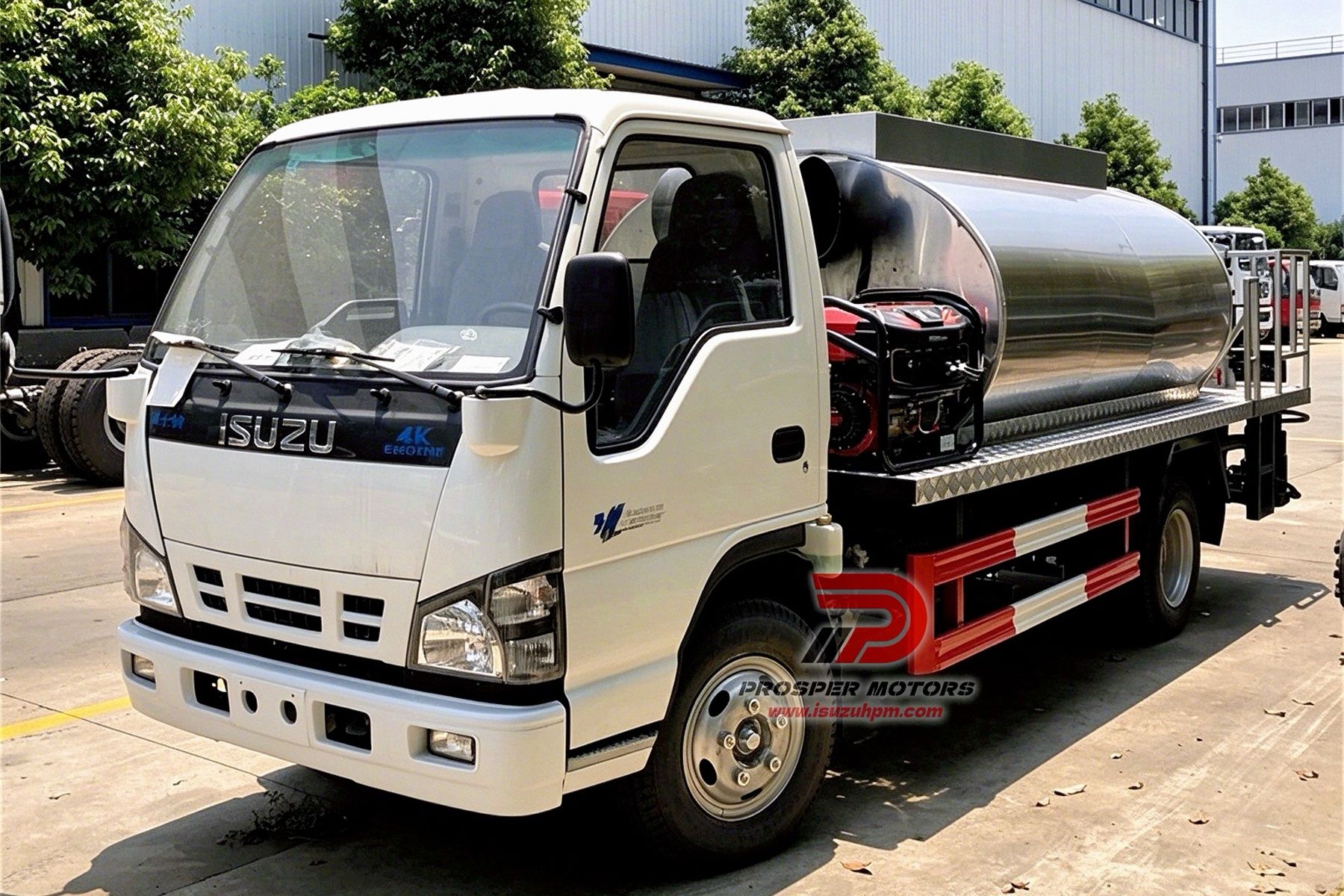
Key Specification | Details |
Model | QKR |
Drive Type | 4×2 |
Tank Volume | 4,000 L |
Number of Spray Nozzles | 26 |
Maximum Spraying Width | 4.5 m |
Spraying Volume | 0.2–2.0 L/m² |
Bitumen Pump Displacement | 680 L/min |
Product details: ISUZU QKR 4×2 4m³ Asphalt Distributor Truck
ISUZU FRR 4×2 6m³ Bitumen Sprayer Truck
The FRR has a 6,000L tank and 30 independently controlled fan-shaped nozzles, with an adjustable spraying width of 2–4.5m. It is configured for prime- and tack-coat work with emulsified asphalt, hot asphalt or modified asphalt.

Key Specification | Details |
Model | FRR |
Drive Type | 4×2 |
Tank Volume | 6,000 L |
Number of Spray Nozzles | 30 independently controlled fan-shaped nozzles |
Spraying Width | Adjustable, 2–4.5 m |
Spraying Volume | 0.3–2.0 L/m² |
Bitumen Pump Displacement | 680 L/min |
Heating Way | Thermal oil heating |
Handheld Spray Gun | 5m hose + handheld spray wand |
Product details: ISUZU FRR 4×2 6m³ Bitumen Sprayer Truck
For projects where the spray pattern needs to be adjusted across different pavement widths, the independently controlled nozzles are a notable feature of this configuration.
ISUZU FVR 4×2 10m³ Asphalt Sprayer Truck
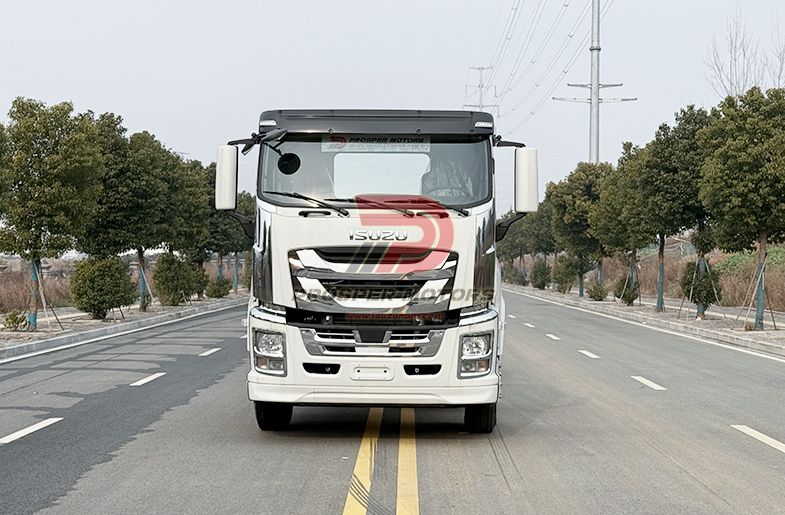
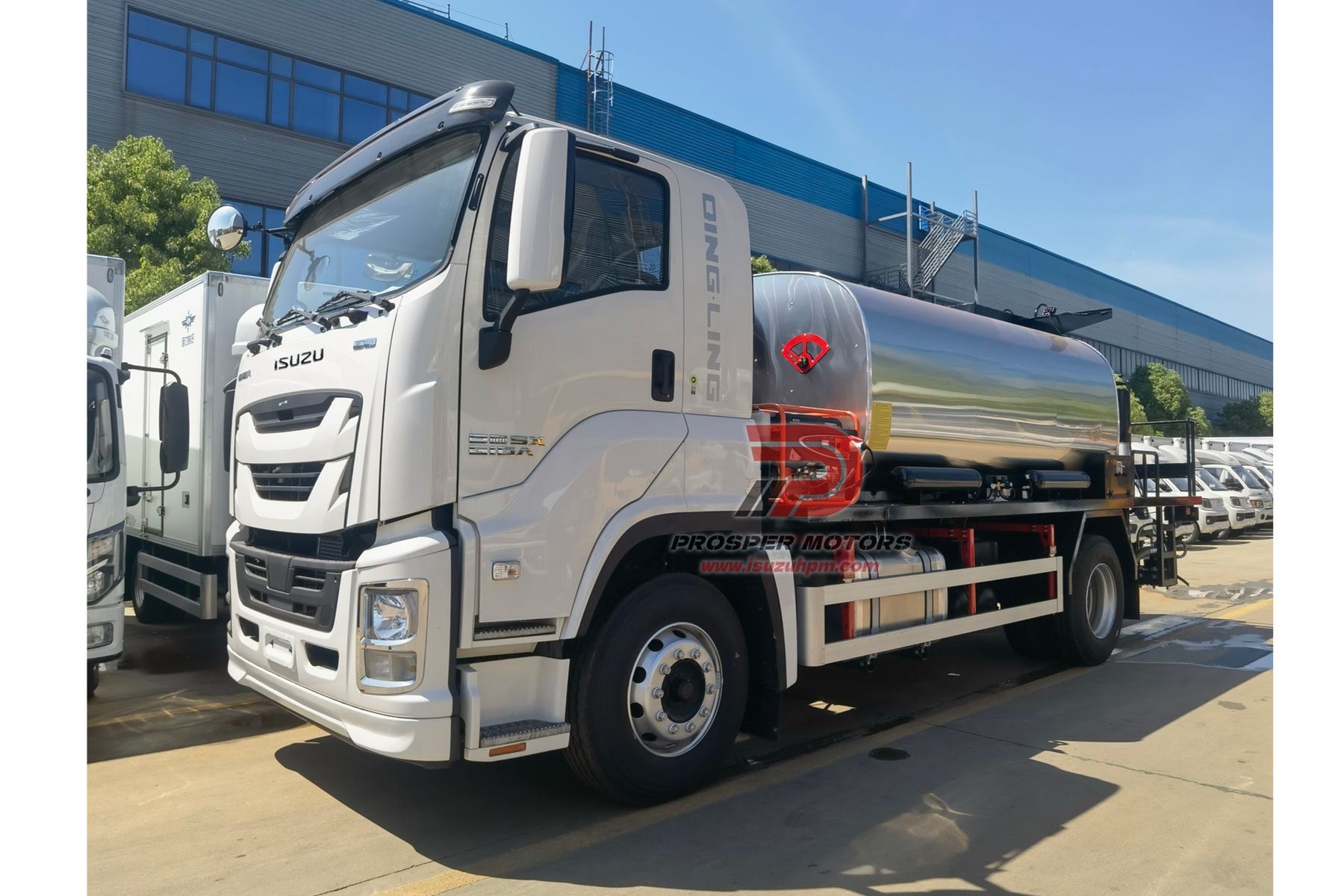
The FVR has a 10,000L tank, 36 nozzles and a three-section folding spray bar. Its adjustable spraying width is 2–4.5m. It also has a handheld spray gun with a 5m hose and wand for small-area repairs, corners and other work where the spray bar is not practical.
Key Specification | Details |
Model | FVR |
Drive Type | 4×2 |
Tank Volume | 10,000 L |
Number of Spray Nozzles | 36 |
Spray Bar | Three-section folding |
Spraying Width | Adjustable, 2–4.5 m |
Spraying Volume | 0.3–3.5 L/m² |
Bitumen Pump Displacement | 950 L/min |
Heating Way | Thermal oil heating |
Handheld Spray Gun | 5m hose + handheld spray wand |
Product details: ISUZU FVR 4×2 10m³ Asphalt Sprayer Truck
The FVR is suited to prime-coat, tack-coat and waterproofing work. Its listed materials include emulsified asphalt, hot asphalt, SBS-modified asphalt and modified asphalt emulsion. The larger tank, folding spray bar and hand spray gun distinguish it within this three-model selection.
Comparing the Three Configurations
Feature | QKR 4×2 | FRR 4×2 | FVR 4×2 |
|---|---|---|---|
Tank Capacity | 4,000L | 6,000L | 10,000L |
No. of Spray Nozzles | 26 | 30 | 36 |
Spraying Width | Maximum 4.5m | Adjustable, 2–4.5m | Adjustable, 2–4.5 m |
Spraying Volume | 0.2–2.0L/m² | 0.3–2.0L/m² | 0.3–3.5L/m² |
Bitumen Pump Displacement | 680L/min | 680L/min | 950L/min |
Distinguishing Features | Light-duty configuration | Independently controlled nozzles | Three-section folding spray bar and handheld spray gun |
Frequently Asked Questions
1.What is the difference between prime coat and tack coat?
Prime coat is applied to a suitable base before the next pavement layer is placed. Tack coat is applied between pavement layers to help them bond. The material and application method should follow the project specification.
2.What asphalt materials can each model handle?
Material compatibility varies by configuration. The QKR is specified for emulsified bitumen and hot asphalt; the FRR for emulsified, hot and modified asphalt; and the FVR for emulsified asphalt, hot asphalt, SBS-modified asphalt and modified asphalt emulsion.
3.Does a larger tank automatically mean a better fit for the project?
Not necessarily. Tank capacity is one factor. The required spraying width, application rate, material and spray-system configuration also matter. The specifications can help narrow down the options, but the intended roadwork should guide the selection.
Explore ISUZU Asphalt Distributor Trucks
Compare the tank capacities and spraying systems with the requirements of your road construction or maintenance work.