




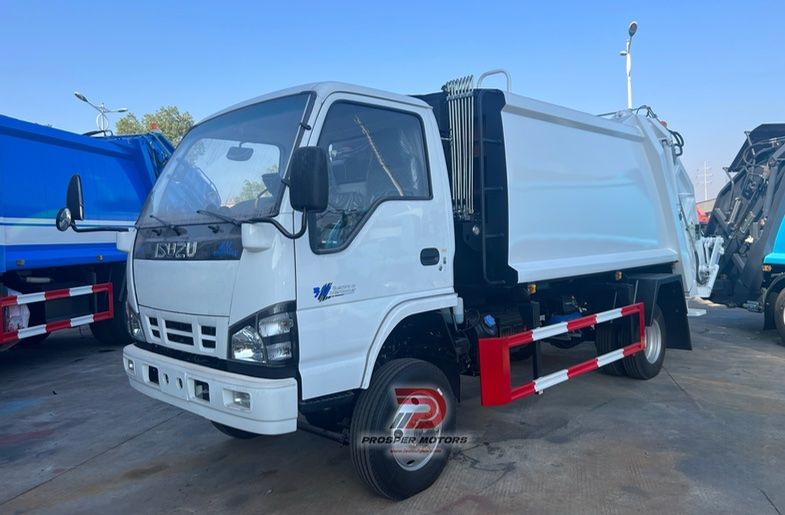
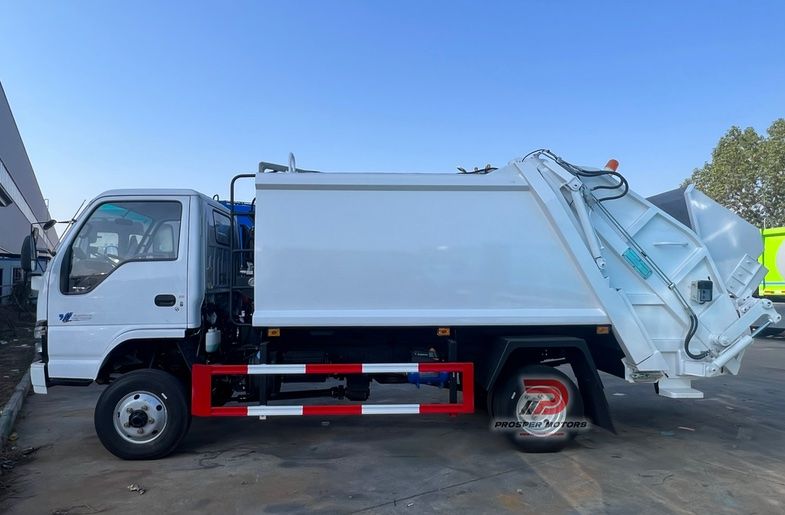
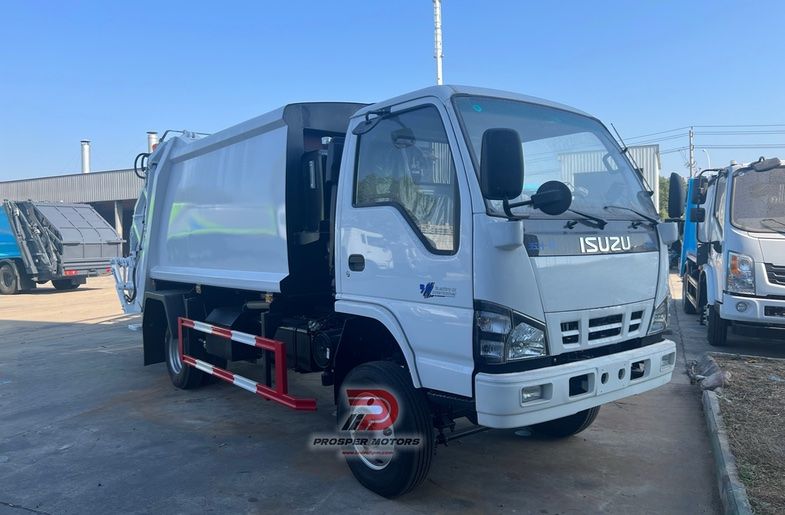
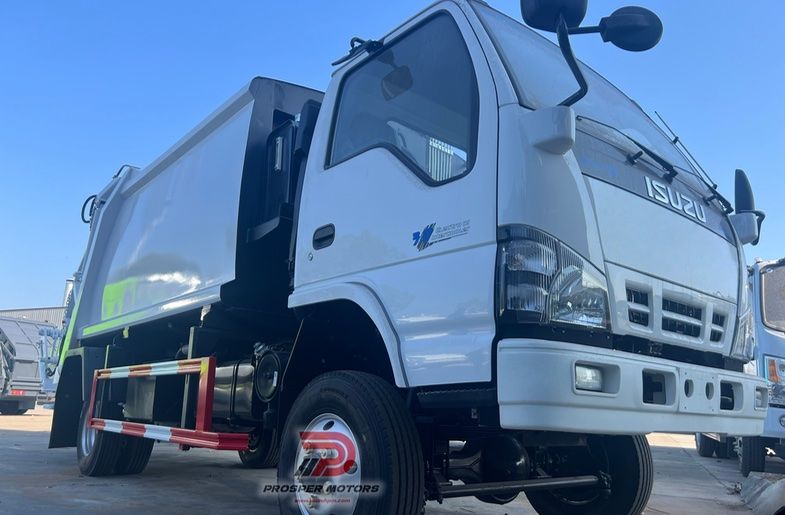
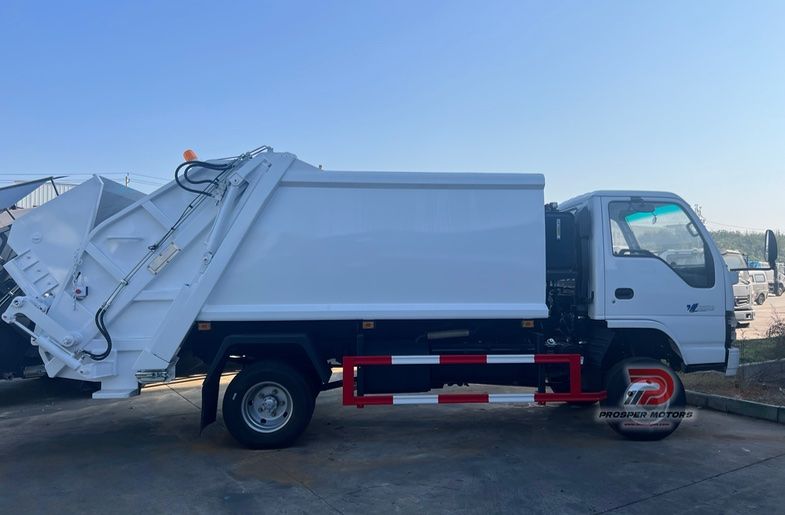
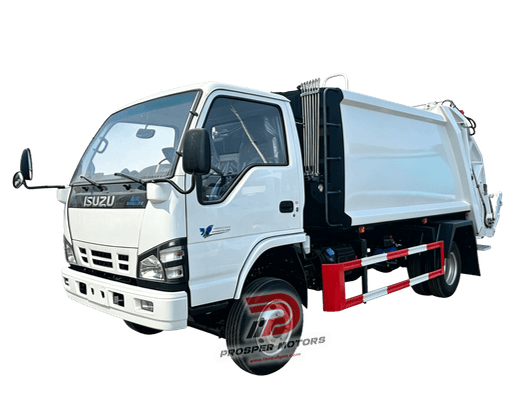
ISUZU QKR 4X4 5 CBM GARBAGE TRUCK
Urban and Off-Road Advantage
Designed for flexible urban operation, the compact 3360mm wheelbase lets this qingling Isuzu garbage compactor navigate cramped downtown blocks, narrow residential lanes and crowded municipal road networks smoothly. Its agile maneuverability simplifies daily centralized domestic waste gathering inside cities, while integrated compression body optimizes loading capacity to lower transfer frequencies for urban sanitation fleets.
Benefiting from genuine 4×4 all-wheel traction, the ISUZU QKR 4X4 garbage collection vehicle breaks route limits to handle suburban waste transport efficiently. Muddy country trails, uneven gravel suburban roads and remote village access paths pose no obstacle for the chassis, realizing seamless waste pickup from downtown to outskirts. The trusted MSB-5MT gearbox ensures stable power shift under full compression load, and the economical 4KH1 engine cuts ongoing fuel costs, making the QKR 4X4 Garbage trucks collect trash truck a cost-efficient sanitation investment for global sanitation contractors.
-
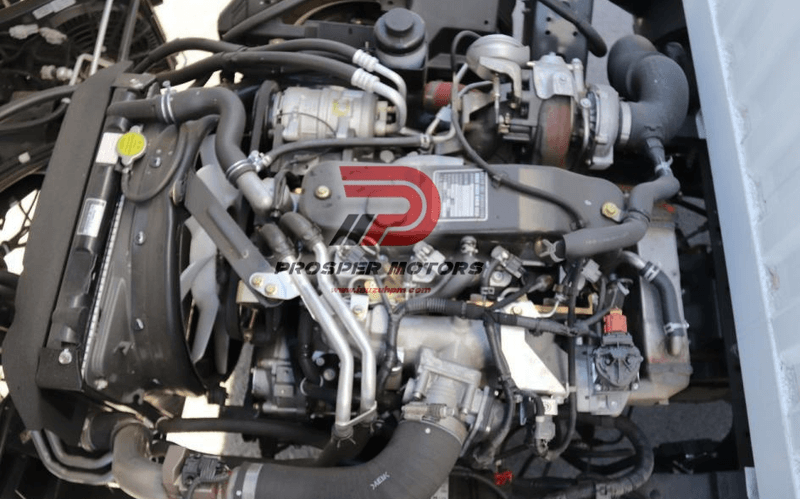
Reliable Engine for Efficient Waste Collection
Powerful and Efficient Performance : This 120HP 4KH1 ensures excellent responsiveness and acceleration under conditions such as starting, climbing, and heavy loads.Mature, Reliable, and Durable Technology: The 4KH1 engine boasts mature and reliable technology, employing high-pressure common rail fuel injection and other technologies to improve combustion efficiency. This significantly enhances overall reliability and durability.Excellent Fuel Economy: With its efficient combustion system and precise tuning, this engine achieves good fuel economy while ensuring power output, outperforming some competitors in fuel consumption control.Relatively Convenient Maintenance: The engine has a mature structural design and high versatility, reducing the complexity and cost of maintenance for users. -
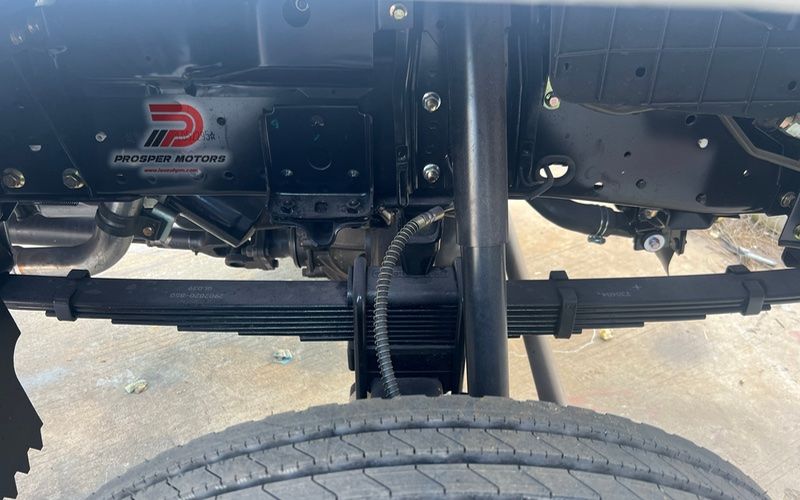
Heavy-Duty Suspension for Stable Waste Transport
Multi-Leaf Spring Load-Bearing Performance: Built for the 3360mm-wheelbase Qingling Isuzu QKR 4X4 chassis, the heavy-duty multi-leaf spring equips the Isuzu QKR Compressed garbage truck. Serving as a key load-bearing part of this qingling Isuzu garbage compactor, it bears full loads of compacted garbage during transportation.Durable Structural Advantages: Matching the 4WD layout of the ISUZU QKR 4X4 garbage collection vehicle, the rugged leaf setup cushions shocks on rough suburban paths and stabilizes the chassis on tight city lanes to reduce tyre wear. Made of premium metails, this original Isuzu leaf spring cuts breakdown and upkeep costs for the QKR 4X4 Garbage trucks collect trash truck
ISUZU QKR 4X4 5 CBM GARBAGE TRUCK Specifications
Key advantages
- 4X4 drive type: breaks route limits to handle suburban waste transport efficiently. Muddy country trails, uneven gravel suburban roads and remote village access paths pose no obstacle for the chassis, realizing seamless waste pickup from downtown to outskirts.
- Powerful performance: This Qingling QKR 4X4 garbage truck equipped with a 4KH1 120hp engine, it delivers strong power and high fuel efficiency, adapting to various working conditions and terrains to meet operational needs.
- MSB-5MT: This ISUZU 4X4 compactor garbage truck for sale utilizing Isuzu's classic MSB-5T transmission, it offers smooth shifting, durability, reliability, fuel efficiency, and strong adaptability. Paired with the 4KH1 engine, it fully utilizes the engine's power.
- Operation and maintenance cost advantages: Isuzu parts have a high market penetration rate, and maintenance and repair costs are low; the 4KH1 engine is fuel-efficient, the MSB-5MT transmission has a low failure rate, the leaf spring structure is sturdy and durable, daily maintenance consumables are inexpensive, and long-term fleet operating expenses are lower.
Our customer case show
Related Products
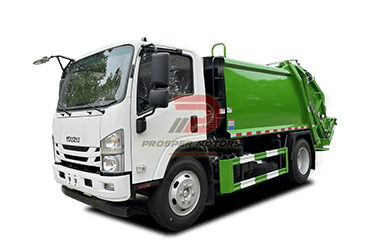
ISUZU FRR COMPRESSED GARABGE TRUCK 4X2 6W
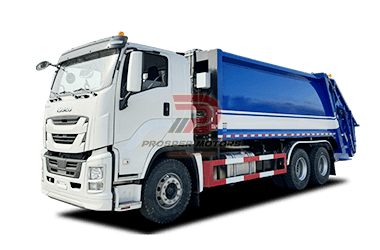
ISUZU 6X4 10W GIGA CYZ 22CBM COMPACTOR GARABGE TRUCK
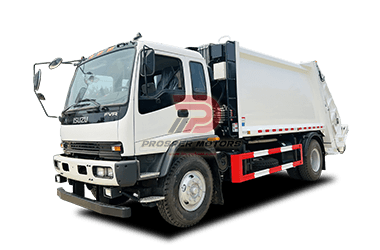
ISUZU 4X2 6W FVR COMPRESSED GARABGE TRUCK
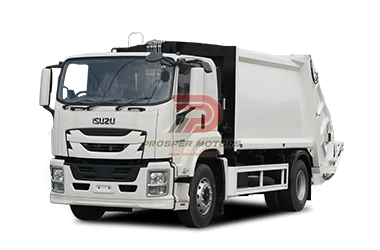
ISUZU 4X2 6W FTR COMPRESSED GARABGE TRUCK
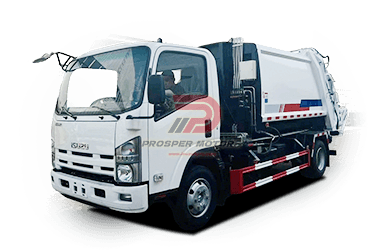
ISUZU 4X2 6W FRR HOOKLIFT COMPRESSED GARBAGE TRUCK
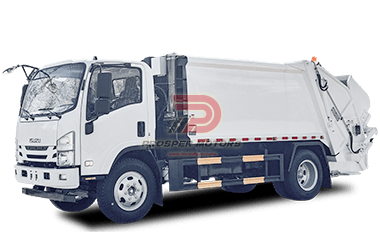
ISUZU 4X2 6W NPR COMPRESSED GARABGE TRUCK
Our most popular questions
-
What are the main types of garbage trucks available?
Common types include compactor garbage trucks (for efficient waste compression), compressed garbage trucks (high-density waste handling), hooklift garbage trucks (versatile container systems), and self loader trucks (automated loading/unloading). Each type suits specific waste management needs. -
How does a compactor garbage truck improve efficiency?
A compactor garbage truck reduces waste volume by up to 70% through hydraulic compression, allowing fewer trips to disposal sites. Ideal for municipal collections, it maximizes payload capacity and lowers operational costs. -
What’s the advantage of a hooklift garbage truck over traditional models?
Hooklift garbage trucks feature interchangeable containers, enabling quick swaps between waste, recycling, or bulk materials. Their modular design enhances flexibility for diverse applications, from construction debris to household waste. -
Can a compressed garbage truck handle hazardous materials?
Standard compressed garbage trucks aren’t designed for hazardous waste. However, specialized models with sealed compartments and corrosion-resistant liners can manage certain non-toxic industrial waste. Always verify local regulations. -
How does a self loader truck reduce manual labor?
Self loader trucks automate waste collection using hydraulic arms and bins, eliminating manual lifting. Workers simply place bins, and the system loads, compacts, and empties them—ideal for tight urban spaces with limited staffing. -
What’s the typical lifespan of a garbage truck?
With proper maintenance, a compactor garbage truck or compressed garbage truck lasts 8–12 years. Hooklift garbage trucks and self loader trucks may last longer due to modular component replacements. Annual inspections are critical. -
Are there eco-friendly options for garbage trucks?
Yes! Electric compressed garbage trucks and hybrid self loader trucks reduce emissions. Some models also feature solar-powered compactors or biodiesel compatibility, aligning with sustainability goals. -
What’s the payload capacity of a standard compactor garbage truck?
Most compactor garbage trucks carry 10–15 tons of uncompressed waste. After compaction, this equates to 3–5 tons of compressed waste, depending on density. Always check the manufacturer’s specs for your model. -
Do hooklift garbage trucks require special training?
Yes, operators need certification for hooklift garbage trucks due to their hydraulic systems and container-swapping mechanics. Training covers safety protocols, weight distribution, and emergency procedures. -
How do I choose between a compressed garbage truck and a self loader truck?
Compressed garbage trucks suit high-volume routes (e.g., citywide collections), while self loader trucks excel in areas with frequent stops (e.g., residential neighborhoods). Assess your collection frequency, terrain, and crew size to decide.
