How Wrecker Trucks Support Road Rescue, Towing and Accident Recovery
When a vehicle breaks down or blocks the road after an accident, removing it quickly is only one part of the job. The recovery team must also protect the damaged vehicle, keep traffic moving, and choose a towing method that matches the vehicle weight, road position and damage condition.
This is where a wrecker truck becomes essential. A wrecker truck, also called a tow truck or recovery vehicle, can lift, pull, tow or transport disabled vehicles. Different configurations are used for urban roadside assistance, municipal traffic clearance, highway towing and heavy-duty commercial recovery.
Instead of choosing only by engine power or truck size, operators should start from the recovery task: What type of vehicle needs to be moved? Is it still able to roll? Is it on a city road, highway shoulder, construction site or accident scene? These questions determine which wrecker truck configuration is practical.
Road Rescue: Fast Clearance for Light Vehicles
Road rescue usually involves passenger cars, SUVs, small vans or light commercial vehicles. These jobs often happen in city streets, parking areas, urban intersections and highway shoulders, where quick response and flexible operation matter.
For this type of work, a light-duty wrecker truck is usually the most practical choice. It does not need the size of a heavy-duty recovery truck, but it must be able to lift, pull and transport disabled vehicles safely.
Representative Model: ISUZU NPR 4X2 4T Wrecker Towing Truck
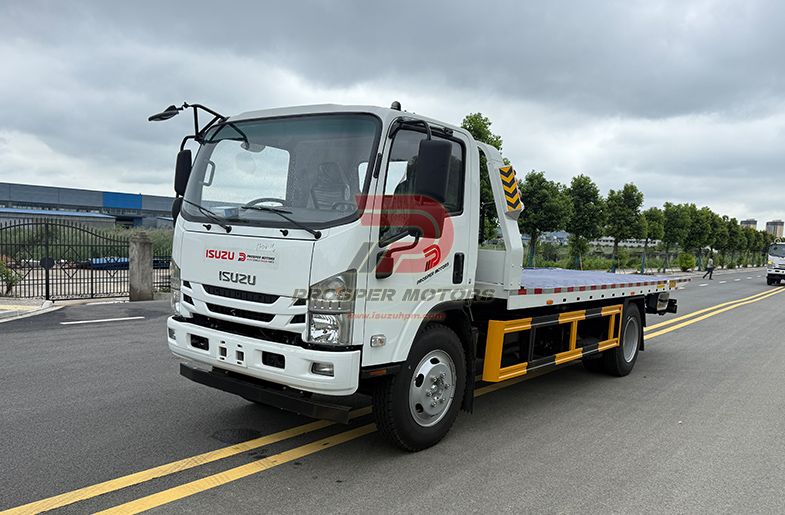
The ISUZU NPR 4X2 4T wrecker towing truck is designed for light cargo vehicles, minibuses and sedans. It is used for road malfunctioning vehicles, urban illegal vehicles and emergency rescue work on highways and urban roads.
Key Item | Specification |
GVW | 7,300 kg |
Power | 130 hp |
Loading Capacity | 4 T |
Transmission | MSB 5-speed gears |
Wheelbase | 3,815 mm |
Drive Type | 4X2 |
Product link: ISUZU 4X2 NPR 4T Wrecker Towing Truck
This model is suitable for roadside assistance companies, city traffic service teams and operators handling frequent light-vehicle towing tasks.
Towing: Moving Disabled Vehicles Without Further Damage
Towing is not simply pulling a vehicle away. The disabled vehicle must be connected securely, lifted at the right point and moved without creating additional damage. This is especially important when the vehicle has damaged wheels, locked steering, accident deformation or limited ground clearance.
For municipal services, highway authorities and towing companies, a medium-duty integrated wrecker can be more useful than a basic light tow truck. It provides stronger chassis support and a more complete recovery structure for daily towing and roadside assistance.
Representative Model: ISUZU FRR 4X2 Towing Conjoined Wrecker Truck
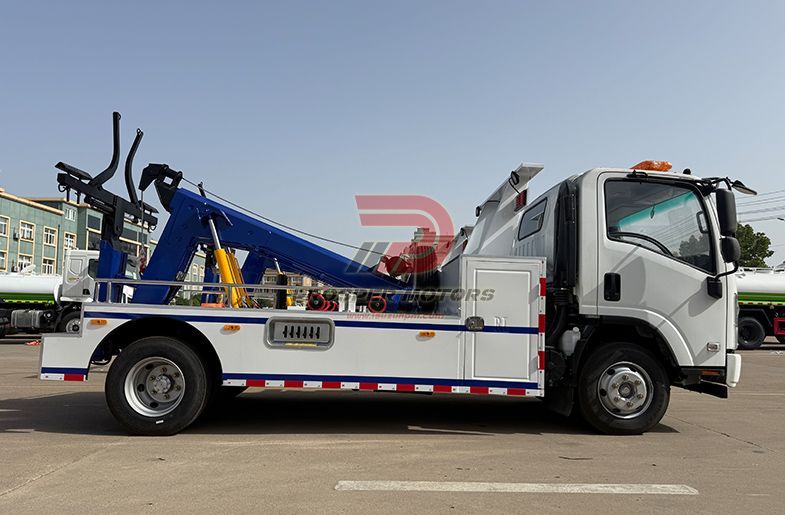
The ISUZU FRR 4X2 towing conjoined wrecker truck is built on an FRR chassis and uses an integrated towing and recovery structure. It is designed for vehicle recovery, transport and roadside assistance.
Key Item | Specification |
GVW | 12,000 kg |
Power | 190 hp |
Loading Capacity | 3 T |
Transmission | MLD 6-speed gears |
Wheelbase | 3,815 mm |
Drive Type | 4X2 |
Product link: ISUZU 4X2 FRR Towing Conjoined Wrecker Truck
This type of integrated wrecker is suitable for operators that need stable towing performance, faster road clearance and more complete recovery functions than a compact tow truck can provide.
Accident Recovery: Handling Damaged or Heavy Vehicles
Accident recovery is more demanding than ordinary towing. The vehicle may be damaged, stuck, positioned off the road or unable to roll. In these situations, the recovery truck may need a stronger chassis, higher towing capacity, hydraulic lifting system, winch and flatbed platform.
Heavy-duty wrecker trucks are commonly used for highway rescue, logistics fleet support, commercial vehicle recovery and difficult recovery tasks after traffic accidents or mechanical failures.
Representative Model: ISUZU GIGA 6X4 Heavy-Duty Flatbed Tow Truck
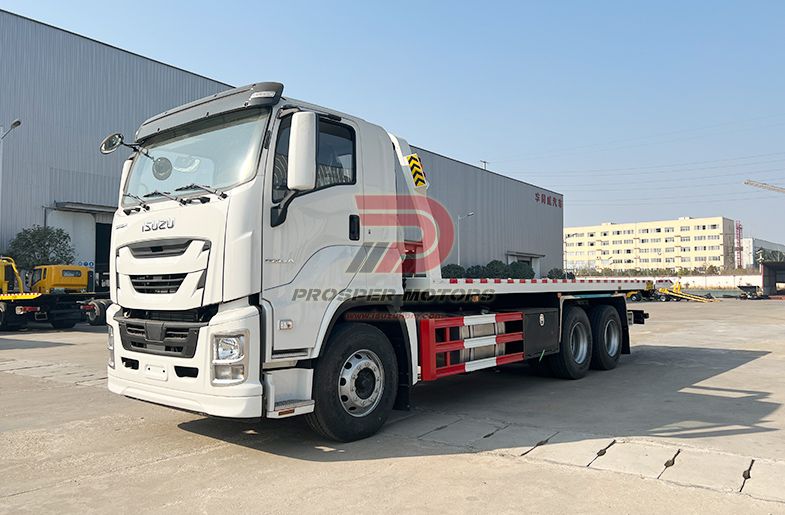
The ISUZU GIGA 6X4 heavy-duty tow truck is designed for immobilized vehicles caused by mechanical failures, accidents or improper parking. It supports recovery work from light-duty passenger cars to heavy-duty commercial vehicles.
Key Item | Specification |
GVW | 25,000 kg |
Power | 380 PS |
Max Towing Capacity | 16,000 kg |
Drive Type | 6X4 |
Transmission | FAST manual, 12 forward and 2 reverse |
Winch Capacity | 10,000 kg |
Steel Cable Length | 45 m |
Product link: ISUZU GIGA 10ton 16ton Flatbed Heavy-Duty Tow Truck
This model is more suitable for highway rescue teams, logistics fleets, heavy commercial vehicle operators and recovery companies that need stronger towing and recovery capability.
Choosing by Recovery Task
A wrecker truck should be selected by the recovery task first, then by chassis size and equipment configuration.
Recovery Task | Typical Working Scenario | Suitable Wrecker Type |
Light roadside rescue | Sedans, SUVs, minibuses, light cargo vehicles | Light-duty wrecker truck |
Urban traffic clearance | Disabled cars, illegal parking, small commercial vehicles | Light or medium-duty tow truck |
Municipal and highway towing | Vans, light trucks, accident vehicles | Medium-duty integrated wrecker |
Heavy commercial recovery | Larger trucks, damaged commercial vehicles | Heavy-duty tow truck |
Difficult accident recovery | Vehicles stuck, damaged or positioned off road | Wrecker with stronger winch and recovery system |
For daily city rescue, a compact and flexible vehicle is usually more efficient. For highway and municipal work, stability and integrated towing functions become more important. For commercial vehicle recovery, towing capacity, winch capability and chassis strength should be prioritized.
Key Factors in Selecting a Wrecker Truck
The right wrecker truck depends on the vehicles it will recover and the road conditions it will face. A towing company focused on passenger cars does not need the same configuration as a highway recovery operator handling heavy commercial vehicles.
Key points to consider include:
Typical vehicle weight and size
Road environment and operating distance
Whether vehicles are usually rolling, damaged or stuck
Required loading capacity or towing capacity
Need for flatbed, underlift, winch or hydraulic recovery system
Frequency of emergency roadside operation
A correctly selected wrecker truck helps reduce response time, protect the recovered vehicle and improve road clearance efficiency.
Need a Wrecker Truck for Road Rescue or Recovery Work?
Prosper Motors supplies ISUZU wrecker trucks for light-duty towing, municipal road clearance, highway rescue and heavy-duty recovery applications. Share your target vehicle type, road conditions and required towing capacity, and the team can recommend a suitable ISUZU wrecker truck configuration for your operation.