How to Choose a Semi Trailer: Flatbed, Lowbed and Fuel Tank Options Explained
Choosing a semi trailer should start with the cargo. Flatbed, lowbed and fuel tank semi trailers can all work with tractor heads, but they are designed for different transport tasks.
The right trailer depends on what you carry, how the cargo is loaded, and whether the route involves ports, highways, construction sites or fuel delivery points. Payload matters, but the trailer structure is what determines whether the equipment is practical for daily operation.
This guide explains how to choose among three common semi trailer types: flatbed semi trailers, lowbed semi trailers and fuel tank semi trailers. The focus is on matching trailer structure with cargo type, rather than choosing only by payload.
Start with Cargo Type, Not Only Payload
Payload is important, but it does not fully explain how a trailer works.
Even when two trailers have similar payload figures, their deck structure and loading method can make them suitable for very different cargo. A flatbed trailer is more suitable for containers, steel, palletized goods and general cargo. A lowbed trailer uses a lower loading platform, making it more relevant for tall or heavy construction machinery. A tank semi trailer is a separate category because it is designed around liquid fuel transport, tank capacity and fuel handling requirements.
Before comparing models, define the main cargo type first. This reduces the risk of choosing a trailer with enough payload but the wrong body structure.
1. Flatbed Semi Trailer: For Containers, Steel and General Cargo
A flatbed semi trailer is one of the most flexible trailer types for freight and logistics operations. Its open platform can support container transport, steel materials, construction materials, palletized goods and some engineering equipment.
Flatbed semi trailers are useful when the cargo needs flexible loading from the side, top or rear. For port container haulage and regional freight distribution, buyers usually compare payload, axle layout, tire quantity and cargo securing design.
Current product options include 3-axle and 4-axle flatbed semi trailers for different payload needs. For standard heavy-duty cargo transport, the 3-AXLES 40 FEET HEAVY-DUTY FLATBED CARGO SEMI TRAILER provides 30Ton payload with 3 axles and 12 wheels. For heavier container and bulk cargo transport, the FOUR-AXLES 20ft 40ft CONTAINER FLATBED SEMI TRAILER provides 60Ton payload with 4 axles and 16 wheels. The Three-axle heavy-duty flatbed cargo semi trailer with protective tailgate provides another 3-axle option for cargo transport where front protection and cargo securing are important.
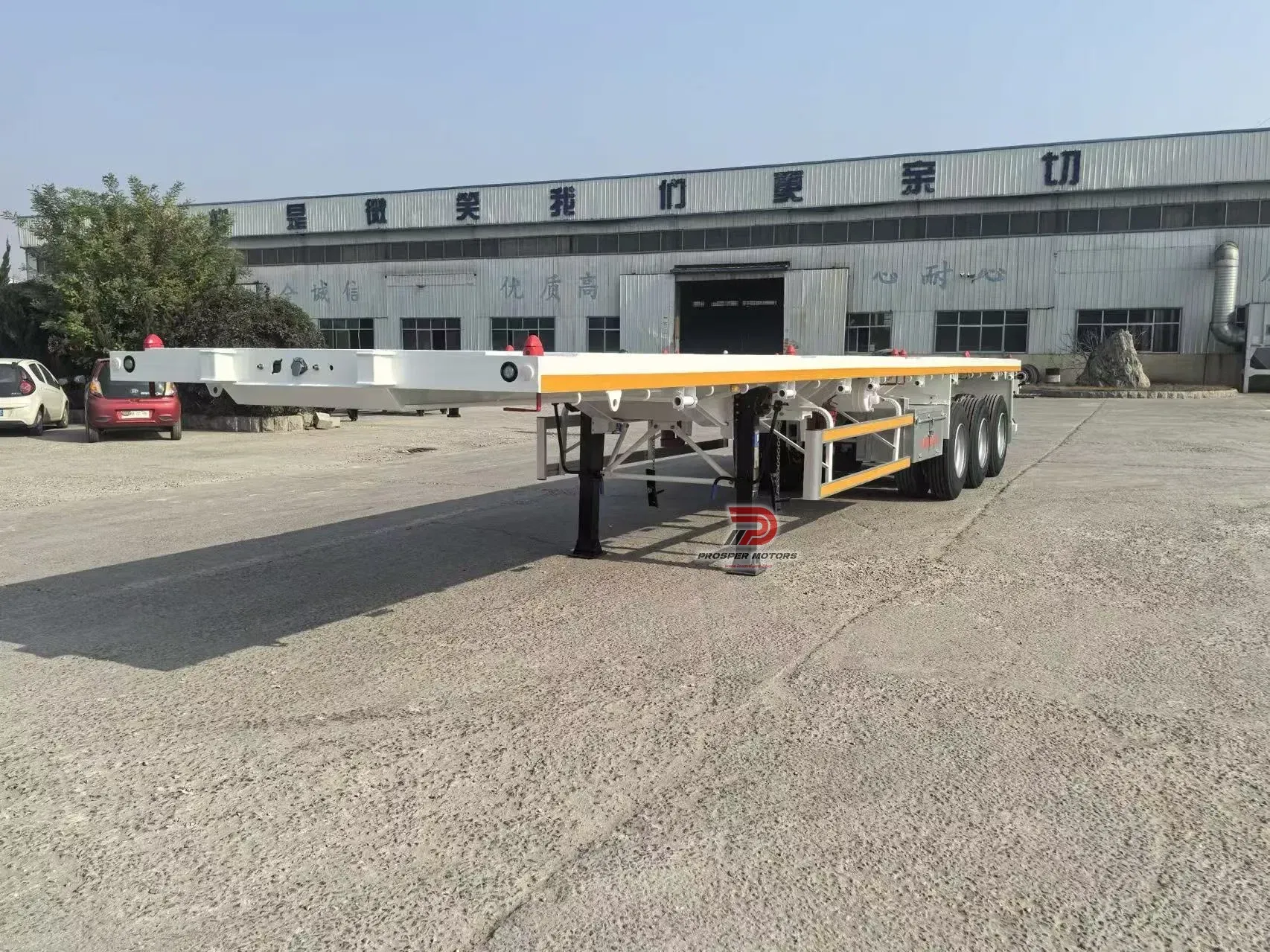
Useful details for selection:
Product | Model | Payload | Tire | Axles |
3-AXLES 40 FEET HEAVY-DUTY FLATBED CARGO SEMI TRAILER | Flatbed Semi Trailer | 30Ton | 12(Wheels) | 3 |
FOUR-AXLES 20ft 40ft CONTAINER FLATBED SEMI TRAILER | Flatbed Semi Trailer | 60Ton | 16(Wheels) | 4 |
Three-axle heavy-duty flatbed cargo semi trailer with protective tailgate | Flatbed Semi Trailer | 33Ton | 12(Wheels) | 3 |
Product links:
3-AXLES 40 FEET HEAVY-DUTY FLATBED CARGO SEMI TRAILER
FOUR-AXLES 20ft 40ft CONTAINER FLATBED SEMI TRAILER
Three-axle heavy-duty flatbed cargo semi trailer with protective tailgate
Choose a flatbed semi trailer when your operation focuses on:
20ft or 40ft container transport
Steel and building material delivery
Palletized cargo transport
Port and highway freight operation
General cargo that needs flexible loading and securing
For buyers comparing 3-axle and 4-axle flatbed trailers, payload is only one part of the decision. Cargo weight, route conditions, loading frequency and local axle load rules should also be considered.
2. Lowbed Semi Trailer: For Oversized Construction Machinery
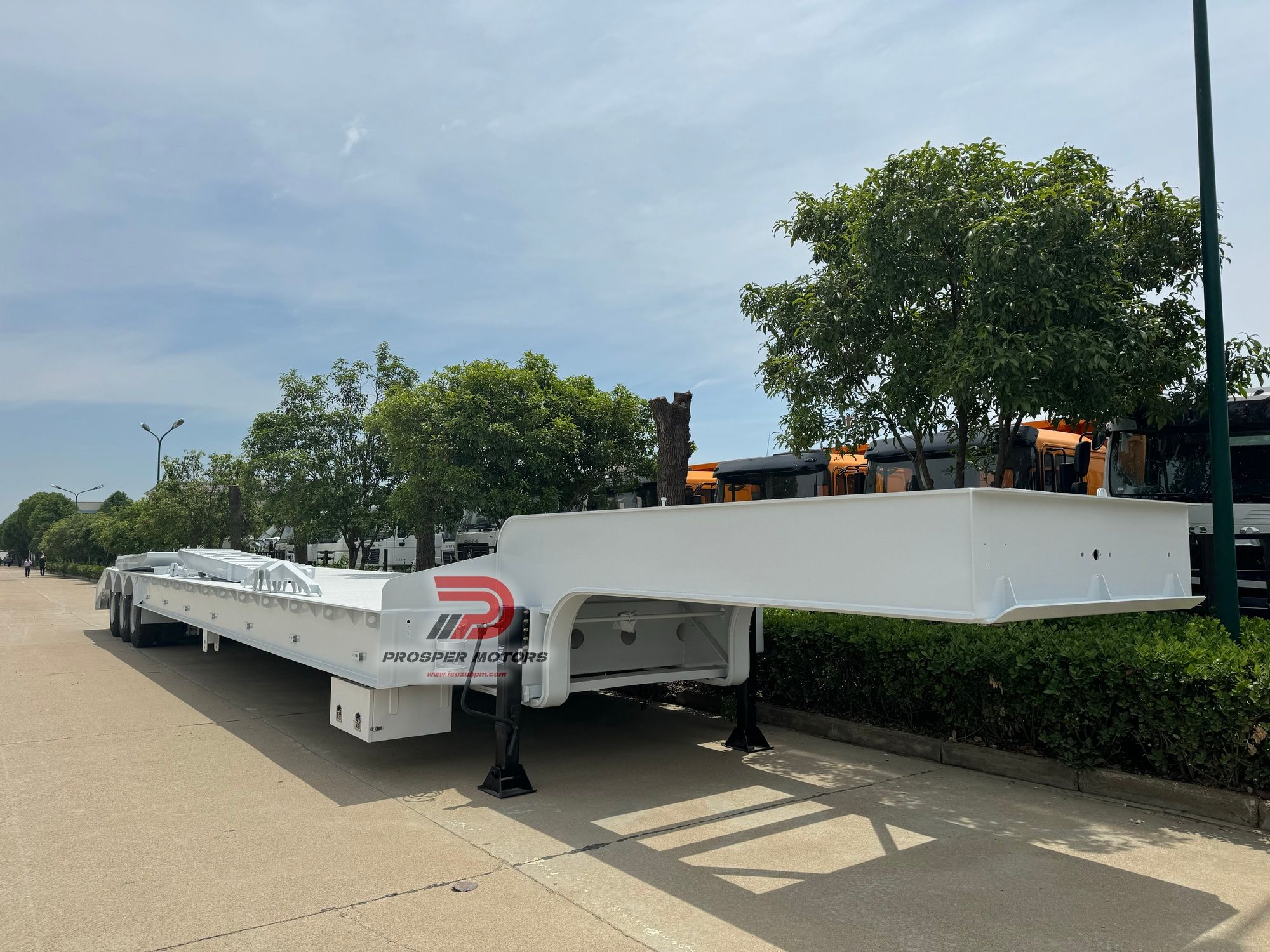
A lowbed semi trailer, also called a low bed trailer or lowboy semi trailer, is designed for heavy and oversized equipment transport. The lower platform can help reduce the overall loaded height for tall machinery.
The 3-AXLES FUWA 46TON LOWBED SEMI TRAILER is a relevant example in this category. It uses a 3-axle configuration and is built for heavy equipment transport. The product information shows 46,000kg GVW, 33,000kg payload, 8.25R20 tire type and 3 axles.
Useful details for selection:
Product | GVW(kg) | Payload(kg) | Tire type | Axles |
3-AXLES FUWA 46TON LOWBED SEMI TRAILER | 46000 | 33000 | 8.25R20 | 3 |
Product links:
3-AXLES FUWA 46TON LOWBED SEMI TRAILER
Compared with a regular flatbed semi trailer, the lowbed structure is more relevant when the cargo is tall, heavy or difficult to load on a standard-height platform. It is often considered for cargo such as excavators, loaders and other engineering equipment.
Choose a lowbed semi trailer when your operation focuses on:
Excavator and loader transport
Construction machinery hauling
Oversized equipment delivery
Heavy equipment with higher transport height
Routes where loading height and stability matter
A lowbed trailer is not necessary for every freight task. For standard containers or palletized cargo, a flatbed trailer may be a more straightforward option. Lowbed trailers become more relevant when cargo shape, height or loading requirements make a regular flatbed less suitable.
3. Fuel Tank Semi Trailer: For Diesel and Fuel Transport
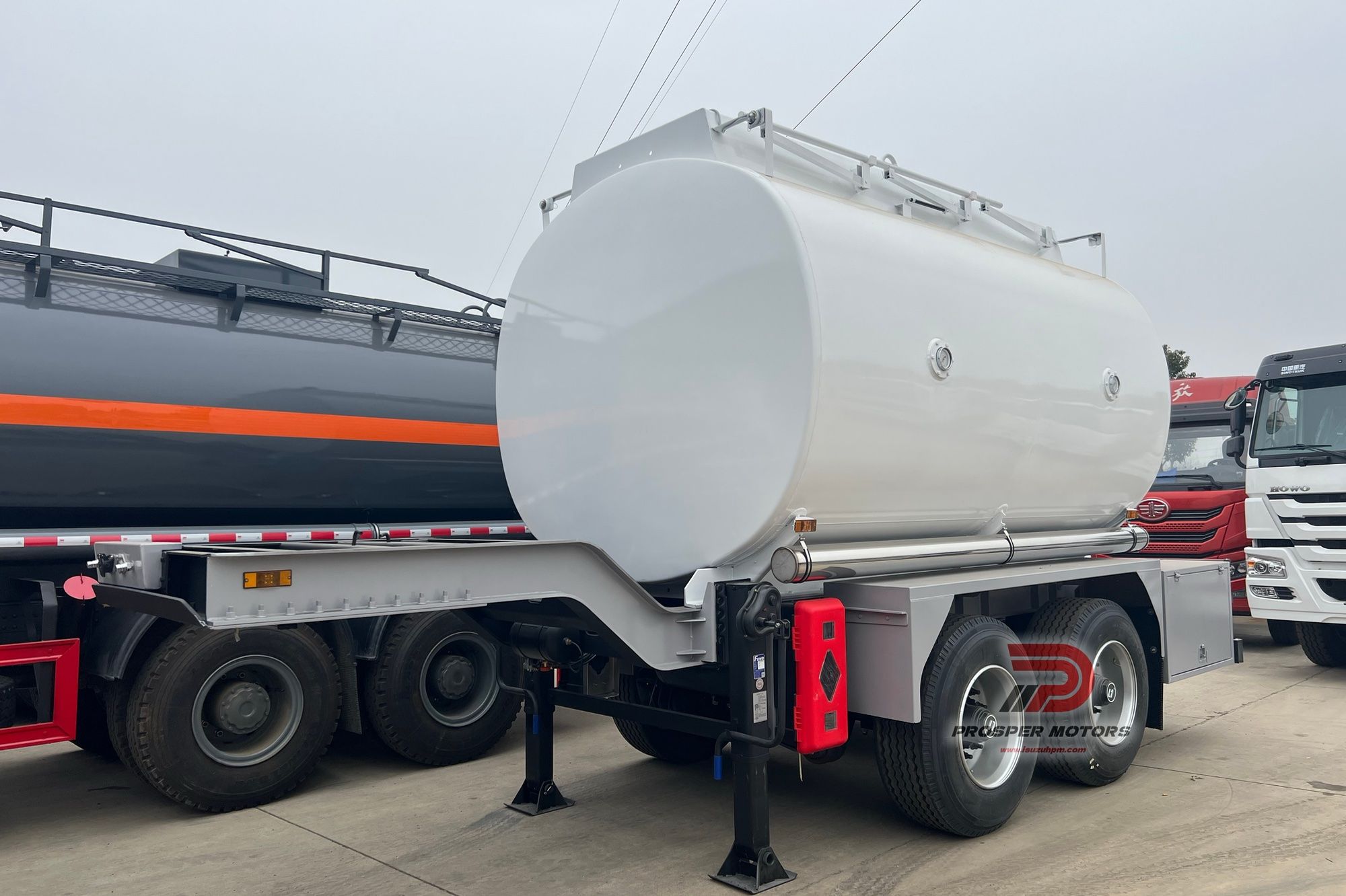
A fuel tank semi trailer is designed for liquid fuel transport. Unlike flatbed or lowbed trailers, its key selection factors include tank capacity, payload, axle layout and fuel handling configuration.
Current product options include both compact and larger tank semi trailer configurations. The 10 CBM 2 AXLES FUEL SEMI TRAILER is listed as a tank semi trailer with 8Ton payload and 10m³ tank capacity. The 3 AXLES 32CBM ALUMINUM FUEL TANK SEMI TRAILER is listed as a tank semi trailer with 27Ton payload and 32m³ tank capacity.
Useful details for selection:
Product | Model | Payload | Tire | Tank capacity(m³) |
10 CBM 2 AXLES FUEL SEMI TRAILER | Tank semi trailer | 8Ton | 8 (Wheels) | 10 |
3 AXLES 32CBM ALUMINUM FUEL TANK SEMI TRAILER | Tank semi trailer | 27Ton | 12 (Wheels) | 32 |
Product links:
10 CBM 2 AXLES FUEL SEMI TRAILER
3 AXLES 32CBM ALUMINUM FUEL TANK SEMI TRAILER
The 10CBM model is more relevant for smaller fuel delivery tasks or operations that do not require large tank volume. The 32CBM aluminum fuel tank semi trailer is more suitable when the operation requires higher fuel transport volume.
Choose a fuel tank semi trailer when your operation focuses on:
Diesel or fuel transport
Fuel delivery for construction sites, farms or industrial areas
Short-distance or regional fuel distribution
Higher-capacity oil transport
Multi-product fuel delivery requirements
For fuel transport, capacity should not be the only selection point. Tank material, compartment design, unloading system, safety valves, grounding protection and local hazardous liquid transport requirements can all affect the final configuration.
Quick Selection Guide
Cargo / Operation Type | Recommended Trailer Type | Relevant Product Direction |
20ft / 40ft containers | Flatbed semi trailer | 3-axle or 4-axle container flatbed trailer |
Steel, pallets and general cargo | Flatbed semi trailer | 40 feet heavy-duty flatbed cargo semi trailer |
Heavy construction machinery | Lowbed semi trailer | 3-axle FUWA lowbed semi trailer |
Short-distance fuel delivery | Fuel tank semi trailer | 10CBM 2-axle fuel semi trailer |
Larger fuel transport | Fuel tank semi trailer | 32CBM aluminum fuel tank semi trailer |
How to Choose the Right Semi Trailer
1. Match the trailer type to the cargo
Flatbed semi trailers are more suitable for containers and general freight. Lowbed semi trailers are more suitable for oversized machinery. Fuel tank semi trailers are designed for liquid fuel transport.
2. Compare payload and axle layout together
Payload should be reviewed together with axle quantity, tire quantity and road regulations. A 4-axle flatbed trailer may be more relevant for heavier container and bulk cargo work, while a 3-axle trailer may be enough for many standard freight tasks.
3. Check loading and unloading conditions
A flatbed trailer supports flexible cargo loading and securing. A lowbed trailer helps with tall or heavy machinery. A fuel tank trailer needs suitable pipeline, valve and unloading configuration for fuel handling.
4. Match the trailer with the tractor head
Semi trailers need to work with a tractor head. Before ordering, buyers should confirm kingpin configuration, traction requirements, road regulations and the existing tractor model in their fleet.
Need Help Choosing a Semi Trailer?
Prosper Motors offers flatbed semi trailers, lowbed semi trailers and fuel tank semi trailers for container transport, heavy equipment hauling and fuel delivery operations.
Share your cargo type, payload requirement, transport route, tractor head configuration and destination country with Prosper Motors. The team can recommend a suitable semi trailer configuration for your logistics, construction or fuel transport business.